What We do
We educate low-resource communities on
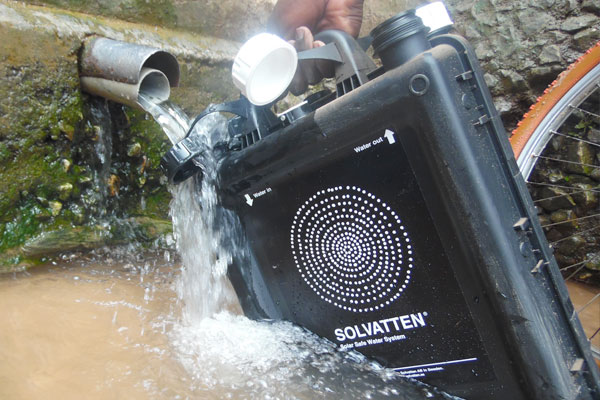
Water, Sanitation and Hygiene (WASH) – Household sensitizations
Funded by IKARE 2014 to 2025, ILF 2026 Onwards SSPP works with underserved urban slums and rural communities to improve access to clean water, sanitation, and hygiene. Through household training, community sensitization, radio talk shows, school debates, and slum clean-up activities, households are supported to adopt safe hygiene practices. The program uses SSPP’s See 11 framework, a set of minimum sanitation standards, to guide and monitor behavior change. The initiative has significantly reduced diarrhea, cholera, and typhoid cases while strengthening community-led structures for long-term sustainability.
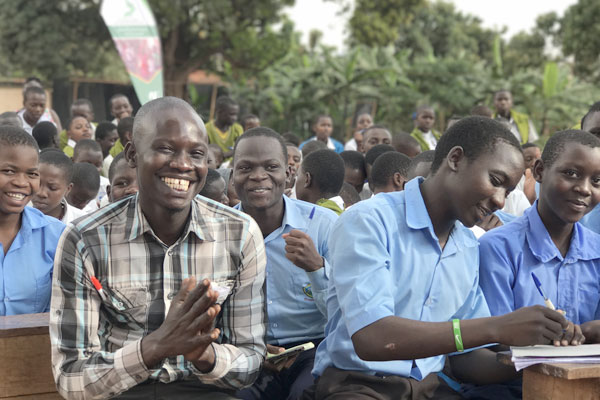
Solvatten Clean Water & Clean Energy Project
Funded by IKARE 2014 to 2025, ILF from 2026 Onwards This project awards and equips WASH-sensitive households with Solvatten solar water treatment units, enabling them to safely heat and disinfect drinking water using solar energy. Implemented in Kampala (Bwaise and Mulago) and Northern Uganda (Dokolo, Kaberamaido, Kalaki), the project reduces reliance on charcoal and firewood, lowers household health costs, and supports climate-friendly practices. Continuous monitoring shows improved water safety, reduced disease incidence, and increased household savings
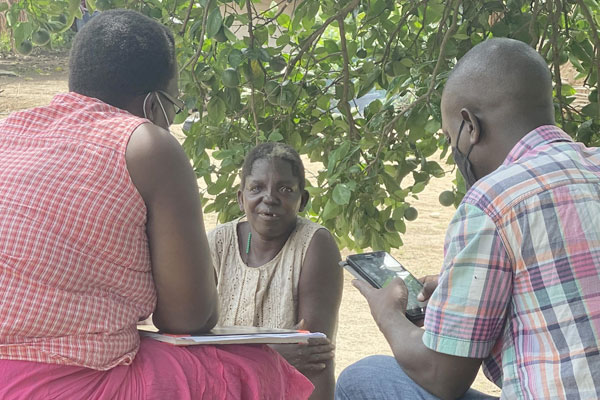
Menstrual Health & Sexual Reproductive Health Program
Funded by IKARE 2020 to 2025, ILF 2026 Onwards, Global Giving 2025 Onwards, Supported by SSE Alumni 2024 Onwards SSPP delivers school- and community-based Sexual and Reproductive Health education with a strong focus on menstrual health and hygiene. The program reaches adolescent girls and boys with accurate information on menstruation, personal hygiene, UTIs, and access to health services. It promotes gender-inclusive conversations, reduces stigma, and strengthens referral pathways to health centers. Senior women teachers and Village Health Teams are trained to sustain SRH education beyond SSPP’s direct involvement. s
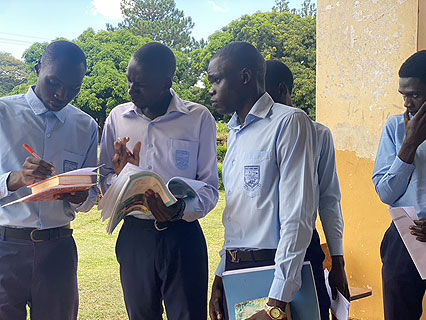
School WASH & Youth Engagement Program (Students Without Borders Initiative)
Supported by IKARE 2014 to 2025, ILF 2026 onwards Through partnerships with primary and secondary schools, SSPP supports WASH-themed school debates, clubs, and clean-up activities. Students are encouraged to research sanitation issues, disease prevention, and climate impacts while becoming community ambassadors for hygiene. The program builds leadership, critical thinking, and long-term behavior change among young people in both urban and rural settings.
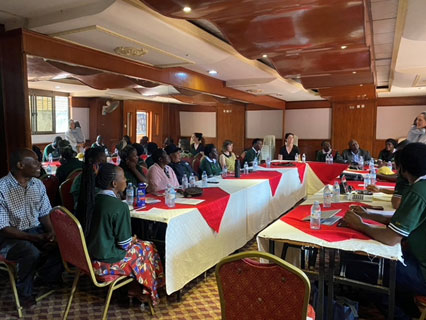
Community Waste Management & Recycling Initiative Kawempe Waste Recyclers Cooperative
Supported by MAD, Forum CIV 2021/22, ILF 2026 Onwards SSPP supports and strengthens the Kawempe Waste Recyclers Cooperative in Bwaise to improve waste management and sanitation in dense informal settlements. The initiative promotes waste collection, recycling, and community clean-up days, improving hygiene while creating local livelihood opportunities. It demonstrates how community-owned structures can sustain WASH improvements even during funding transitions.

Purchase for Progress Support, Post Harvest and Social Support Enterprise (SSE) – Trainings, Grain Bulking & Trade through the SPV HLI.
Co-funded by IKARE 2025, the founder 2024 onwards and HLI onwards. To ensure long-term sustainability, SSPP (supported by IKARE) established a Social Support Enterprise focused on grain bulking and trade, particularly maize. Operated through Horizon Legacy Investments Ltd, the enterprise addresses post-harvest losses, unfair pricing, and market access challenges faced by smallholder farmers. Profits are reinvested to support SSPP’s social programs, creating a self-sustaining impact model. This program goes ahead to (under the SSPP) train farmers on post-harvest management, farm inputs to improve production and productivity as well as catalyzing systems to support production.
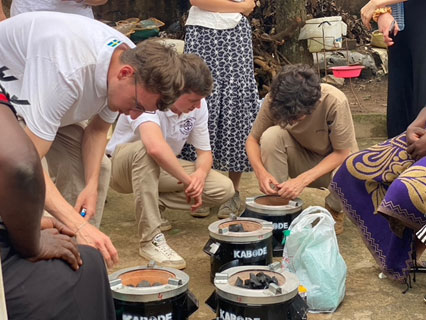
Student Capacity Building & Global Internship Program Stockholm School of Economics Partnership ongoing.
Each year, SSPP hosts Master’s students from the Stockholm School of Economics for a month-long applied internship. Students contribute research and strategic insights on WASH, SRH, climate change, data systems, and organizational strategy. The partnership strengthens SSPP’s internal capacity while exposing students to real-world development challenges.
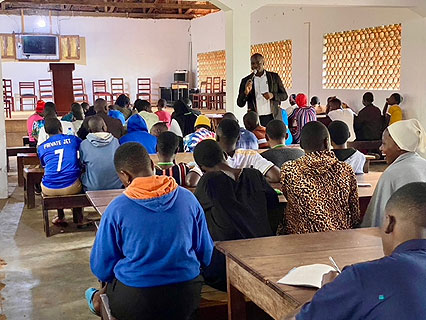
Digital skills, Sports and Education equity for rural areas in Uganda
Funded by Global Giving 2025 and ILF 2026 Onwards The project contributes to the increase of the overall performance of the students in the rural schools at the national examinations, it intends to increase employability by increasing digital skills amongst these rural students. Increase networking and build research skills among the resource poor perceived communities and youth in Uganda.
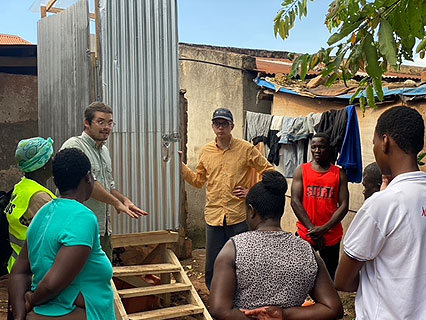
Research Support and infield mentorship for Bachelors, Masters, and PhD students Supported by EUNSICA (2014/15), IKARE 2024, SSPP in 2026, ILF 2026 onwards
The project supports special internships both local and international, thesis and project completion of masters and PhD students and practicums for undergraduate students to enable them get infield exposure and experience to make their academic journey more meaningful and part of a solution to the thematic areas of the SSPP and the communities.
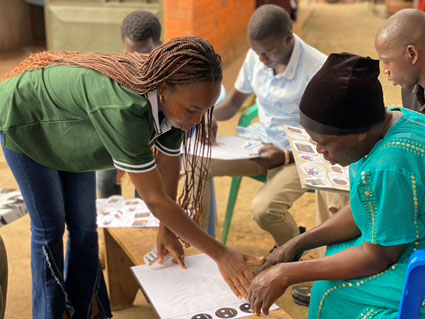
Inclusive Entrepreneurship and Civic Empowerment IECE+ Project Funded by Inclusive Business Sweden as part of SIDA Funding. 2025 to 2028.
Inclusive Entrepreneurship & Civic Empowerment (IECE+) is a three-year initiative (2025–2028) implemented by the Students Support and Philanthropy Program (SSPP) in partnership with Inclusive Business Partners (IBP), with support from Sida’s Civil Society Strategy 2025–2029. The project aims to strengthen local institutions, expand inclusive livelihood opportunities, and promote civic participation by empowering young people and women as drivers of social and economic transformation. Through IECE+, over 600 youth and women entrepreneurs across five districts in Uganda will be trained and mentored using IBP’s 32-tool inclusive business methodology, adapted and contextualized by SSPP to reflect local realities. IECE+ combines entrepreneurship training, peer learning, and civic engagement platforms to equip participants with practical skills, supportive networks, and the confidence needed to build sustainable enterprises while actively engaging in community decision-making processes. In addition to supporting entrepreneurs, the project strengthens SSPP’s institutional capacity, positioning the organization as a national hub for inclusive entrepreneurship and civic empowerment by 2030. By linking economic empowerment with civic voice, IECE+ promotes inclusive, community-led development, ensuring that entrepreneurship serves not only as a source of income, but also as a foundation for participation, accountability, and long-term social change. Want to know more? Contact us
Services
We are Committed to Community Services
What we do
We are commited to educating low-resource communities